

2026 Hyundai IONIQ 9 Range & Charge Times
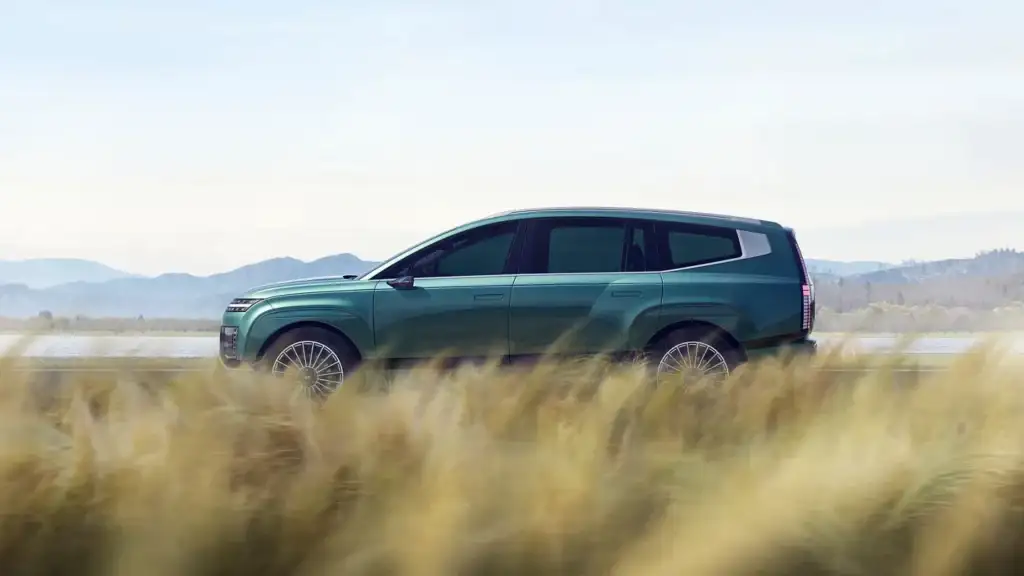
If you’re shopping a three-row EV, range is one of the first questions you should ask, and it should be answered clearly. The Hyundai IONIQ 9 is Hyundai’s newest large, family-sized electric SUV, and it starts strong with a long-range battery across the lineup and EPA-estimated ranges that land above the 300-mile mark on every trim.
2026 Hyundai IONIQ 9 Range (all trims)
For the 2026 model year, Hyundai lists the IONIQ 9’s EPA-estimated range by trim and drivetrain, and the headline takeaway is simple: every 2026 IONIQ 9 is engineered to clear 300 miles of EPA-estimated driving range, with the rear-wheel-drive S trim delivering the top figure.
Here are the EPA-estimated range figures Hyundai publishes for 2026:
-
IONIQ 9 S (RWD): up to 335 miles (EPA-estimated)
-
IONIQ 9 SE and SEL (AWD): 320 miles (EPA-estimated)
-
IONIQ 9 Limited, Calligraphy, and Calligraphy Design (AWD): 311 miles (EPA-estimated)
Those groupings matter for real-world shopping because they map to how many motors you’re running and, in many cases, how the vehicle is equipped. In plain terms, the most range comes from the most efficient IONIQ 9 configuration (RWD), while the higher-output AWD configurations trade a bit of range for traction and performance.
2026 IONIQ 9 Range: what stays the same across the lineup
Even though the EPA range number changes by trim, Hyundai built the 2026 IONIQ 9 lineup around a consistent foundation: every 2026 IONIQ 9 uses the same long-range battery capacity (110.3 kWh). That’s important because it means you’re not choosing between “small battery” and “big battery” the way you are on some EV lineups; you’re choosing drivetrain and equipment, which then influences efficiency and the final EPA range rating.
Hyundai also positions IONIQ 9 as an 800V-class EV for fast charging, and the brand has publicly stated rapid DC fast-charge targets (commonly cited as 10–80 percent in about 24 minutes under ideal conditions with high-power charging). Charging speed does not change the EPA range rating, but it absolutely changes how easy long trips feel in practice.
2026 IONIQ 9 Range: why the trims land at 335 vs. 320 vs. 311 miles
From a dealership standpoint, the easiest way to set expectations is to connect the range rating to the hardware.
-
RWD S at 335 miles: With a single motor driving the rear wheels, the vehicle typically has less drivetrain loss and lower overall energy demand, which helps it earn the highest EPA estimate in the lineup.
-
AWD SE/SEL at 320 miles: Adding AWD improves traction and confidence in wet weather and winter conditions, but the additional front motor and related components generally increase energy consumption, which is why the EPA estimate steps down from the RWD figure.
-
AWD upper trims at 311 miles: Limited/Calligraphy/Calligraphy Design are positioned as the most premium, and they pair AWD with higher content and performance-oriented configurations. More power capability and/or equipment can reduce efficiency, which is reflected in the 311-mile EPA estimate Hyundai publishes.
If you’re deciding between these, the right question usually isn’t “Which range number is biggest?” but “Which range number fits my driving?” For many Virginia Beach-area commutes, any of these ranges can cover multiple days of local driving on a full charge. Where the difference shows up is road trips, cold-weather efficiency swings, and whether you prefer AWD confidence over maximizing miles per charge.
2026 IONIQ 9 Range: what impacts your real-world miles per charge
EPA estimates are the best apples-to-apples tool we have in the U.S., but your actual range will vary. Hyundai explicitly notes that range depends on multiple factors and that battery capacity decreases over time with use.
From what we see with EV owners every day, these are the biggest real-world range factors:
-
Temperature: Cold weather can reduce range because the battery and cabin both need energy (especially at highway speeds).
-
Speed: Sustained high-speed driving usually consumes more energy than mixed suburban driving.
-
Tires and wheels: Different wheel/tire setups can change efficiency, which is why range often differs across trims and configurations.
-
Cargo and passengers: A three-row SUV is built for people and gear; extra weight increases energy demand.
-
Driving style: Quick acceleration and frequent high-power bursts will reduce total range versus smoother inputs.
If you want your IONIQ 9 to feel effortless day to day, the strategy is simple: charge where it’s convenient (home Level 2 is the usual sweet spot), keep tires properly inflated, and plan DC fast charging around your route for longer trips.
Other markets: WLTP range notes for IONIQ 9
You may see range numbers online that look higher than EPA figures because some countries use the WLTP test cycle instead of EPA. Hyundai has published WLTP-based estimates internationally (for example, “up to 620 km” on certain configurations in some communications). Those values are not directly comparable to EPA ratings, which are typically more conservative, so for U.S. shoppers we recommend using EPA estimates when you’re comparing vehicles.
Conclusion
As of today, the Hyundai IONIQ 9’s model-year range story is straightforward because it starts with 2026, and every 2026 IONIQ 9 is engineered to deliver 300+ miles of EPA-estimated driving range. If your priority is maximum miles per charge, the 2026 IONIQ 9 S RWD leads with up to 335 EPA-estimated miles. If you want AWD traction and still want a strong long-distance number, SE and SEL deliver 320 EPA-estimated miles. And if you’re aiming for the most premium, feature-rich builds, the upper AWD trims come in at 311 EPA-estimated miles.
When you’re ready, our team at Checkered Flag Hyundai World can walk you through which IONIQ 9 configuration best matches how you drive in Hampton Roads, help you plan charging for your routine, and make sure you’re choosing the right balance of range, features, and performance for your family.