

When Did Hyundai Split From Genesis?
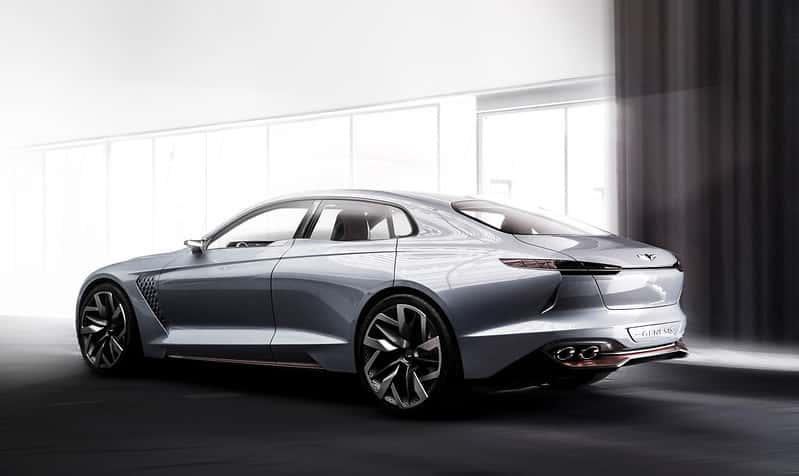
With Toyota having Lexus and Honda having Acura, Hyundai launched its Genesis luxury arm about a decade ago to tap into the premium market. It wasn’t long before Genesis started making waves in the luxury automotive world with its affordable and feature-packed vehicles. As its success continued and its lineup expanded, Genesis decided to distinguish itself from its parent company by becoming a standalone marque. So, is Genesis a Hyundai brand? Let’s take a closer look at the history of Hyundai and Genesis.
Hyundai and Genesis Presplit History
The Genesis brand’s origins stem from 2003 when Hyundai created the Concept Genesis. Equipped with a V-8 engine and rear-wheel drive, this luxury sport sedan was intended to compete with premium midsize sedans such as the Audi A6, BMW 5 Series, and Mercedes-Benz E-Class. Before its debut at the 2008 Detroit Auto Show, the Concept Genesis was rumored to become a standalone model. However, it was eventually launched with a Hyundai badge.
In 2009, Hyundai released its first-ever high-performance, rear-wheel-drive sports car, the Genesis Coupe. This model generated a lot of interest among the racing and drifting community. Later, Hyundai decided that its luxury division was mature enough to become its own brand and spun off Genesis into the world of luxury cars and SUVs. Genesis was announced as an independent brand in November 2015, but the vehicles were still sold in Hyundai dealerships.
Reasons for the Split
The main reason for Genesis parting ways with Hyundai was the need to target a different clientele. Car shoppers planning to spend a large sum of money on a vehicle want a more luxurious driving experience than Hyundai dealerships typically offer. With a rise in demand for luxury cars, Genesis became its own brand so it could focus on meeting the needs and preferences of premium car buyers.
The split wasn’t the initial plan when Hyundai began selling Genesis vehicles in the United States in 2016. At that time, the automaker only sold two models, the G80 and G90 sedans. With such a small lineup, opening a new set of dealerships under the Genesis brand might not have been financially feasible.
Nonetheless, Genesis significantly increased its offerings in the following years, which now include the G70, G80, G90, GV60, GV70, and GV80. Due to the expanded lineup, it needed more space to showcase and store its vehicles, making it necessary to launch its own dealerships. Separating from Hyundai allowed Genesis to move toward premium brand strategies and niche marketing.
Timeline of the Split
Genesis was spun off into a luxury car brand after the release of its first vehicle, the G90. Thanks to its competitive pricing, excellent build quality, and generous feature content, the Genesis G90 quickly became one of the bestselling models in the full-size luxury sedan segment.
Genesis’ road to becoming a standalone brand was more complex than it was for other automakers’ luxury divisions. Although Lexus and INFINITI models shared the same platforms as Toyota and Nissan vehicles, they were never sold through Toyota and Nissan dealerships. They were also markedly different from their nonluxury cousins in terms of styling. Genesis started off being badged as a Hyundai and sold in Hyundai dealerships, meaning it was never really a separate entity from Hyundai in its early years.
So, when did Genesis separate from Hyundai? It wasn’t until 2022 that Genesis truly achieved independence. In that year, the luxury brand opened its first standalone dealership in Lafayette, Louisiana.
Impact on Hyundai and Genesis
The decision to open standalone Genesis dealerships caused frustration among dealers selling both brands under one roof, but Hyundai felt that having high-end sedans in the same showroom as its more budget-friendly models could undermine Genesis’ image as a premium brand.
The split from Hyundai set the stage for the Genesis to compete against its luxury rivals. It helped boost the brand’s exclusivity by limiting the availability of its vehicles to a smaller network of dealerships. Now, Genesis can focus on targeting the luxury car segment, while Hyundai continues to make affordable and eco-friendly vehicles that deliver great value for money.
Present-Day Relationship Between Hyundai and Genesis
Although they’re now separate brands, Hyundai and Genesis are both subsidiaries of Hyundai Motor Group, making them sister companies. The two automakers can access their parent company’s technologies, resources, and manufacturing and design expertise, which means their vehicles are similar. Many Genesis models are built on the same platform as their corresponding Hyundai vehicles and equipped with similar powertrains and features. Both brands offer an industry-leading 10-year or 100,000-mile powertrain warranty.
Following the split, Genesis and Hyundai have done exceedingly well in their respective markets thanks to their commitment to providing the best customer value. In the U.S., there were 35 standalone Genesis dealerships as of May 2024 and more than 850 Hyundai dealers.
Experience a New Hyundai or Used Genesis Firsthand in Virginia Beach, Virginia
Despite having parted ways with Genesis, Hyundai continues to produce top-quality vehicles with engaging performance, upscale cabins, and extensive features. Higher-end Hyundai models have a wealth of luxury amenities to provide a pampering ride, making them comparable to luxury cars. If you plan to buy a new vehicle in the Virginia Beach area, visit Checkered Flag Hyundai and check out our large inventory of new Hyundai and used Genesis models. Regardless of your budget and lifestyle, you’ll find something on our lot that checks all your boxes. Contact us today to schedule a test-drive.
Hyundai_Genesis_Concept_497269 by Derrick Brutel is licensed with CC BY-SA 2.0
0 comment(s) so far on When Did Hyundai Split From Genesis?