

2026 Hyundai TUCSON vs. 2026 Toyota RAV4
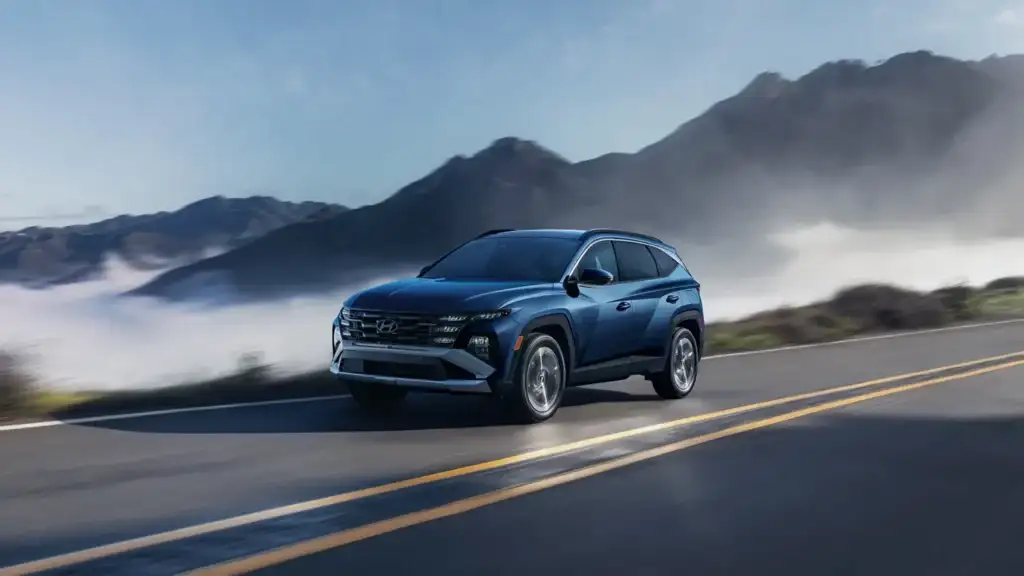
The 2026 Hyundai TUCSON and the 2026 Toyota RAV4 stand at the top of the compact SUV market, with Toyota entirely redesigning the RAV4 and Hyundai continuing to refine the TUCSON’s modern package. At Checkered Flag Hyundai World, we’ll guide you through a Hyundai TUCSON vs. RAV4 comparison to help you choose the right SUV for navigating Hampton Roads’ unique challenges. Our analysis focuses on what matters most to residents of Virginia Beach, Norfolk, and Chesapeake.
Powertrains and Everyday Performance
For 2026, Toyota has abandoned gas-only RAV4s. Every version is now electrified, either as a standard or plug-in hybrid. Regular hybrids deliver 236 horsepower with all-wheel drive or 226 horsepower with front-wheel drive — a RAV4 hybrid first. The RAV4 Plug-in Hybrid offers a massive 320 horsepower. All RAV4s use a continuously variable transmission.
Hyundai offers something for everyone. The TUCSON’s 2.5-liter gas engine produces 187 horsepower and 178 lb-ft of torque with an eight-speed automatic transmission. The TUCSON Hybrid delivers 231 horsepower and 258 lb-ft of torque, while the TUCSON Plug-in Hybrid achieves 268 horsepower and 271 lb-ft of torque. All electric TUCSONs use a six-speed automatic transmission.
For Hampton Roads Bridge-Tunnel commuters, these differences matter. The TUCSON offers a gas-only option without electric pricing, whereas the RAV4 insists on hybrids only but backs this with serious plug-in hybrid muscle.
Fuel Economy and Electric Range
This compact SUV comparison for Virginia Beach drivers reveals a range of gas mileages. The front-wheel-drive gas TUCSON achieves 25 mpg in the city and 33 mpg on the highway, while the all-wheel-drive TUCSON Hybrid Blue SE delivers 38 mpg combined. The TUCSON Plug-in Hybrid provides a consistent 35 mpg in the city and on the highway. You’ll also enjoy 32 miles of electric range, enough for trips from Virginia Beach to Norfolk without gas.
Standard RAV4 hybrids achieve 44 mpg in the city and 39 mpg on the highway. With the Woodland variant, you get 38 mpg city/35 mpg highway. For 2026, the RAV4 Plug-in Hybrid has increased its electric range from 42 miles to 50 miles, covering most Hampton Roads commutes twice before using gas.
Technology, Software, and Infotainment
The 2026 RAV4 boasts Toyota’s new Arene software platform, with enhanced safety systems and multimedia functions. You get a 10.5-inch touch screen as standard (up from 8 inches) and a 12.3-inch digital gauge display on every model. Higher trims offer an optional 12.9-inch center display. Wireless Apple CarPlay, Android Auto, and dual Bluetooth come standard.
Every Hyundai TUCSON comes with dual 12.3-inch screens as standard. The package includes wireless phone mirroring and wireless charging on all but the base SE. Some models offer Digital Key 2.0 with fingerprint authentication and push-button start.
For Hampton Roads drivers seeking value in technology, the TUCSON offers more standard features up front. The RAV4’s new software platform might be more intuitive, and the optional 12.9-inch display may look impressive, but why pay extra for features Hyundai includes as standard?
Safety and Driver Assistance
Toyota’s Safety Sense 4.0 offers emergency braking, pedestrian detection, lane-keeping assist, and adaptive cruise control. The manufacturer has added blind-spot warnings, rear cross-traffic alerts, and safe exit alerts for opening doors near traffic or cyclists.
Hyundai SmartSense includes adaptive cruise control, forward collision avoidance with pedestrian and cyclist detection, and blind-spot monitoring. It also features forward attention warning, which uses infrared cameras to monitor driver focus. It might seem intrusive, but it could help in tunnel traffic.
The Hyundai SmartSense vs. Toyota Safety Sense comparison reveals differences in approach, resulting in safety ratings that favor the TUCSON. The 2024 model earned five stars from the National Highway Traffic Safety Administration and the Top Safety Pick+ award from the Insurance Institute for Highway Safety (IIHS). The 2025 TUCSON Hybrid earned a 9.3 safety score from U.S. News & World Report, surpassing the RAV4 Hybrid’s 8.6. The latter failed to secure the IIHS’s 2025 Top Safety Pick. Both protect families well, but the TUCSON has an edge. The best way to find out for yourself is to schedule a test-drive.
Space, Comfort, and Usability
The TUCSON gives your rear passengers 41.3 inches of legroom; the RAV4 offers 37.8 inches. Front occupants enjoy 40.1 inches of headroom compared to the RAV4’s 37.9 inches. The TUCSON’s rear shoulder room stretches 56 inches wide.
In a comparison of the TUCSON’s cargo space vs. the RAV4’s, the former comes out on top. The TUCSON Hybrid offers 38.7 cubic feet behind the rear seats and 74.5 cubic feet when you lower them. The RAV4’s figures are 37.8 cubic feet and 69.8 cubic feet. The RAV4 Plug-in Hybrid provides 33.5 cubic feet behind the second row and 63.2 cubic feet when you lower it, while the TUCSON Plug-in Hybrid provides 31.9 cubic feet or 66.3 cubic feet, depending on seat configuration.
The TUCSON Hybrid includes heated front seats, a power-adjustable driver’s seat, and a hands-free power liftgate as standard. The RAV4 starts with manual seats (not heated unless you pay more) and a regular liftgate.
Ownership Experience and Warranty Confidence
Hyundai dominates warranty coverage with a five-year/60,000-mile limited warranty and 10-year/100,000-mile powertrain protection. The hybrid battery comes with an eight-year/100,000-mile warranty.
Toyota offers a three-year/36,000-mile basic warranty, five-year/60,000-mile powertrain coverage, and two years of complimentary maintenance. The hybrid battery warranty lasts 10 years/150,000 miles.
J.D. Power gives the TUCSON Hybrid an 85 reliability score, outstripping the RAV4’s 80. For families in Hampton Roads, where salty air and tunnel traffic test vehicles, Hyundai’s warranty coverage provides peace of mind when you need repairs at higher mileage.
Which SUV Is Right for Hampton Roads Living?
Choose the 2026 Hyundai TUCSON if you want maximum powertrain options, appreciate dual 12.3-inch screens as standard, value Hyundai’s 10-year/100,000-mile powertrain warranty, and need extra cargo room. The starting price of $29,200 could also be an advantage. Although Toyota hasn’t yet announced its pricing for the 2026 RAV4, Edmunds expects it to start at around $33,000. Consider the 2026 Toyota RAV4 if you crave 320 horsepower from its plug-in hybrid, trust the popularity behind America’s best-selling passenger vehicle (475,000 sold in 2024), and don’t mind a shorter warranty.
The RAV4 may have better fuel economy, and you might consider the elimination of gas only an advantage. But the TUCSON’s standard dual 12.3-inch screens, class-leading cargo space, and that industry-best 10-year/100,000-mile powertrain warranty give it the edge. It’s with good reason that U.S. News & World Report named the TUCSON 2025’s Best Compact SUV for the Money.
Experience the TUCSON Advantage at Checkered Flag Hyundai World
If you’re eager to experience the 2026 TUCSON firsthand, visit us at Checkered Flag Hyundai World, your premier Hyundai dealer in Virginia Beach. Our knowledgeable team will answer any questions about this exciting vehicle and guide you through its many features. We’re also happy to discuss financing, trade values, and payment calculations. Schedule a test-drive today, and discover why the TUCSON is the wise choice for Virginia Beach families seeking maximum value without sacrificing quality.
0 comment(s) so far on 2026 Hyundai TUCSON vs. 2026 Toyota RAV4